How Many Schools Use Virtual Reality? Latest Facts
How many schools use virtual reality? Learn where VR is used in education, what schools use it for, its benefits, costs, and barriers to adoption.
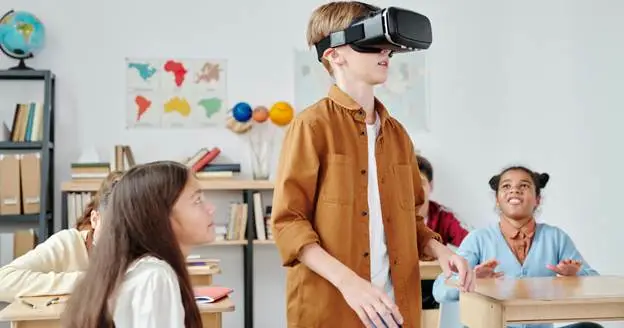
Virtual reality sounds like something that belongs in a gaming center, not a classroom.
Yet more schools are using VR to give students experiences that books and videos cannot always provide.
Still, asking how many schools use virtual reality does not have one universal answer.
No single global database counts every school with a VR headset, and numbers vary by country, school type, and what counts as using VR.
Some schools own headsets, while others borrow equipment or use VR during special lessons.
For families looking for fun things to do with kids in Providence or Rhode island, VR can also be a fun way for children to learn through interactive experiences outside the classroom.
In schools, however, the goal is usually more focused: help students see, practice, and experience ideas that may be hard to teach through a textbook alone.
How Many Schools Use Virtual Reality?
No reliable worldwide percentage shows exactly how many schools use virtual reality.
One useful example comes from Indonesia.
UNESCO-UNEVOC reports that MilleaLab, a VR education platform, had reached 1,500 schools and more than 16,000 active users in Indonesia.
It had also trained and certified 5,200 teachers to create and use VR learning content.
That number does not mean 1,500 schools worldwide use VR.
It shows that school-based VR adoption can reach a significant scale within a specific education system.
Research also shows that adoption is far from universal.
A study of teachers from several European countries found that 73.28% said their schools had never used VR, while only 3.45% said their schools used it sometimes and 2.59% said they used it very often.
So, when someone asks how many schools use virtual reality, the most accurate answer is that thousands of schools use VR in some form, but there is not enough global data to give one trustworthy percentage.
Why Are Schools Using VR?
Schools use VR because it can turn an idea into an experience.
Instead of only reading about ancient Rome, students can walk through a virtual recreation.
Instead of watching a video about the human body, they can examine a 3D model.
Common uses include:
- Virtual field trips
- Science and biology lessons
- History and geography
- Medical and health training
- Vocational education
- Workplace safety practice
- Language learning
- Special education
- Virtual laboratories
UNESCO explains that extended reality can support virtual labs, simulations, training, field trips, virtual tours, language learning, and accessibility support.
How Does VR Help Students Learn?
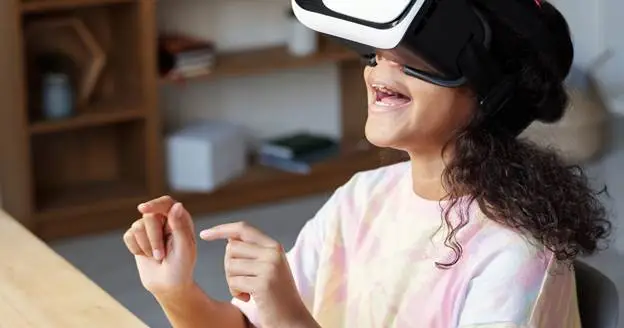
VR is most useful when it adds something difficult to provide in a normal classroom.
For example, a school may not be able to take every student to a museum, factory, archaeological site, or another country.
A virtual experience can give students a visual and interactive version of that experience.
VR can also allow students to practice without real-world risk.
A vocational student could practice operating equipment in a simulation before using the real machine.
A safety lesson could place students inside a simulated emergency and ask them to make decisions.
UNESCO-UNEVOC reports that VR-based training can provide students with an interactive setting to prepare for workplace tasks, including training for higher-risk environments.
What Subjects Use Virtual Reality?
VR is not limited to one school subject.
Science
Students can examine cells, organs, molecules, planets, and other structures in 3D.
History
VR can recreate historical places and events, giving students a stronger sense of location and scale.
Geography
Students can visit virtual locations and study environments thousands of miles away.
Vocational Training
VR is particularly useful for students who need hands-on practice.
They can repeat tasks in a controlled setting before moving to real equipment.
UNESCO-UNEVOC highlights VR use in technical and vocational education and training, where students can practice skills through simulations.
Languages
VR can place students inside simulated conversations or locations where they practice communication.
What Stops More Schools From Using VR?
If VR can be useful, why doesn’t every school have headsets?
Cost is one major reason.
Schools may need to pay for:
- VR headsets
- Computers or other hardware
- Software
- Educational content
- Internet access
- Device storage and charging
- Teacher training
- Technical support
Teacher preparation is another issue.
In one European teacher study, more than 60% of respondents said using VR was difficult, while almost 95% reported that school staff was either not trained or poorly trained in using VR.
UNESCO-UNEVOC also notes that schools need to assess their readiness before introducing technology-enhanced learning and that teacher training and support are important for successful VR use.
Is VR Effective in Schools?
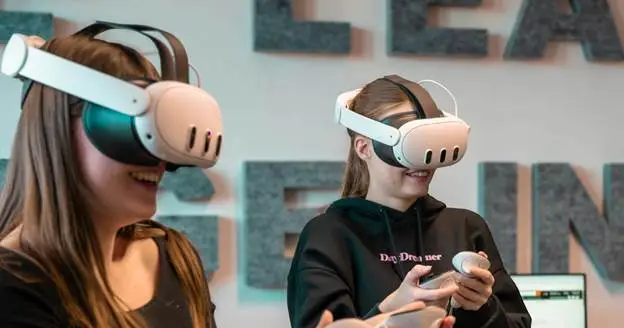
VR can support learning, but it should not replace teachers or traditional classroom instruction.
UNESCO’s 2023 Global Education Monitoring Report notes that VR can effectively supplement regular teaching.
It also cites research in which more than 40% of respondents reported improvements in learning outcomes.
At the same time, the report notes that VR training may not always be as effective as real-life training.
This distinction matters.
VR works best as a teaching tool, not as the whole lesson.
A teacher can introduce a topic, use VR to give students an experience, and then follow it with discussion, questions, writing, or hands-on work.
Conclusion
So, how many schools use virtual reality?
There is no dependable global total, but available evidence confirms that VR is already being used by schools in multiple countries and at meaningful scale.
The strongest use cases are those where VR gives students something they cannot easily get from a textbook or standard video: practice, simulation, virtual travel, 3D visualization, and safe hands-on experiences.
VR is still not available in every school.
Cost, teacher training, equipment, and technical support remain important barriers.
For schools that can use it well, however, VR can add a valuable new way for students to learn.
As VR technology becomes more accessible, more schools may find practical ways to use it alongside traditional teaching.